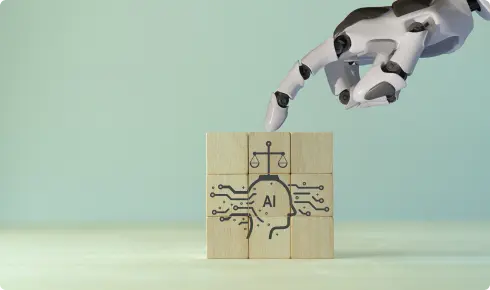

Why staying human will matter more than ever.
KEY POINTS
- Thriving in 2026 won’t be about working harder or faster; it will be about staying grounded.
- Small daily actions build capacities like courage and optimism—skills you develop, not fixed traits.
- In an age optimized for speed and AI replication, depth and authenticity become most irreplaceable assets.
As we approach 2026, the pace of change that has become so familiar over the last few years shows no signs of slowing. AIcontinues its rapid advance, uncertainty seems to be the only constant, and many of us feel stretched thin trying to keep up. How can we navigate this shifting landscape while staying grounded, purposeful, and whole?
Over the past year, I’ve explored various dimensions of this challenge, from the psychology of courage to the neuroscience of slow thinking. From my own journey, and from researching and writing about these issues, one insight keeps resurfacing: thriving in 2026 won’t come from working harder or moving faster. Rather, what will matter is cultivating specific practices that protect your humanity, sharpen your thinking, and help you remain present even as the world accelerates around you.
Here are seven things you can do right now to prepare yourself for what’s ahead.
Build Your Courage Muscle
Courage isn’t a trait you either have or lack. It’s a capacity you develop through practice. And just as lifting weights builds physical strength, taking small brave actions builds your courage muscle. The key is recognizing that you don’t need to face down your biggest fear today; you just need to take the next step in front of you.
And remember: You don’t need to feel brave to act bravely. The feeling follows the action, not the other way around.
Give Your Best Ideas Time to Simmer
Our brains need time to make unexpected connections and develop genuine insight—but this happens only when we give our minds space to wander.
Neuroscience research shows that the brain’s default mode network, which activates during rest, is essential for creativity and deep understanding. When we’re constantly consuming and producing, we get output without depth.
- Try keeping an “idea crockpot”, a place where you write down important questions and let them simmer without immediately trying to solve them.
- Protect time for walks or other activities that keep your hands busy and your mind free.
- Practice saying “I’m still thinking about that” when someone asks for your opinion on something important.
Deep thinking can’t be rushed.
Practice Single-Tasking to Reclaim Your Attention
Despite what we tell ourselves, multitasking doesn’t make us more efficient; it makes us worse at everything we’re trying to do. Research consistently shows that attempting to handle multiple tasks simultaneously significantly reduces our cognitive performance.
The practice of “slow attention”—focusing fully on one task at a time—isn’t just more productive. It’s also more humane. When we race through our days trying to do everything at once, we lose our connection to ourselves.
- Choose one task and give it your full focus.
- Take five minutes daily to breathe deeply.
- Mute non-essential notifications and protect screen-free time.
Remember: slower is often smoother, and smooth is ultimately faster. Slow down to speed up.
Embrace Your Contradictions as Creative Fuel
Are you analytical or intuitive? Ambitious or content? Traditional or disruptive?
Why not both? What if, instead of trying to resolve such tensions you embraced them?
Research on highly creative individuals reveals that the most original thinkers aren’t those who have eliminated their contradictions but those who have learned to inhabit them fully. Creative people contain multitudes; they’re simultaneously humble and confident, playful and disciplined, solitary and collaborative.
In an age in which AI can replicate patterns and optimize processes, your contradictions are precisely what make you irreplaceable. Keep a list of your own paradoxical qualities. When you feel pulled in opposite directions, resist the urge to choose sides. Instead, explore the tension. It’s part of the beautiful mess of being human.
Protect Your Digital Identity and Agency
As AI becomes more sophisticated at replicating voices, faces, and behavioral patterns, a new form of identity theft is emerging, one that steals not your credit card number but your very persona.
This isn’t just a privacy issue; it’s a psychological one. When a digital version of you acts independently, it threatens your sense of self and agency. After all, identity is the story we tell ourselves about who we are, and that story requires that we maintain some control over how we’re represented.
- Be thoughtful about what you share online.
- Understand your rights regarding digital likeness.
- Advocate for stronger legal protections.
In a world in which machines can replicate your image and voice, what remains truly yours is your intentionality and your authentic presence.
Nevertheless, here’s what to do when a machine steals your self.
Reconnect with Why Your Work Matters
Only two in ten employees globally feel engaged at work. That means most people spend the majority of their waking hours intellectually and emotionally disconnected from what they’re doing.
When work loses its soul, we limp through our days feeling adrift. But when we reconnect with purpose—with why what we do matters— everything shifts. Health improves, resilience increases, and we rediscover pride in our contributions.
- Investigate your own relationship with work.
- Learn what genuinely motivates you.
- Look for the real impact your work has on others.
- Find the aspects that align with your values.
As the Stoic philosophers taught 2,000 years ago, you can’t always change what you do, but you can often change how you relate to it.
Here’s why work feels empty and how to reignite purpose.
Choose Optimism as a Daily Practice
Optimism isn’t naive positivity or the denial of difficulty. It’s a quiet, daily practice of staying present and holding onto possibility even when the future feels unclear.
Cultivating optimism begins with acceptance rather than avoidance. We need to feel what is true before we can move forward from it. Then we anchor ourselves through purpose, stay close to what grounds us through simple rituals, and let others walk beside us rather than becoming isolated in our pain.
- Begin each day with one grounding practice, however small.
- Connect your daily actions to a larger purpose.
- Trust that meaning can emerge from difficulty if you remain open to finding it.
Remaining Human
2026 will bring technological acceleration, ongoing uncertainty, and pressures to move faster and produce more. But you need practices that will help you stay grounded when everything feels unmoored, that protect your capacity for depth in a world optimized for speed, and that preserve your humanity in an age of thinking machines.
These seven practices offer exactly that. They won’t eliminate the challenges ahead, but they will help you meet them with more presence, more purpose, and more of yourself intact. They are all expressions of the same fundamental commitment: the choice to remain fully human in an age that often asks us to be less than that.
[Photo: toa555/Adobe Stock]
Original article @ Psychology Today.