
More output is no longer a sign of progress

When effort costs nothing, attention must be rationed. The organizations that design those limits will be the ones that can still tell good work from noise.
The memo was never the point. The point was to clarify your thinking

AI can produce a polished six-pager in seconds. That doesn’t mean there are valuable ideas behind it, or that anyone will actually read it.
Six executive roles that AI will not eliminate

Leaders should delegate mechanical execution to AI but retain ownership functions that will remain critical to organizational differentiation.
Why the heart will matter more in an AI-driven world

Tesla, Porsche, and Alfa Romeo each unveiled a new car this month. Each one answers the same question differently: Once a machine can drive it, what is a car for? The answer matters to every organization.
Dinner Is the New Meditation

Our minds wander nearly half the time, and it makes us unhappy. A three-star chef, a 13th-century Zen monk, and a pot of my mother’s lentils show how dinner can bring us back.
AI expertise isn’t the same as AI oversight. Boards need both

These three questions can help boards rebalance for AI without discarding the experience they rely on.
AI Transformation Requires Redesigning Work, Not Cutting Roles

If leaders default to headcount reduction, the result will be an organization that is smaller but not smarter.
Understand a job before you eliminate it—a guide to redesigning work in the age of AI

Most AI redesigns start with a task list. That’s why they fail. Start with what the role is for, and the picture changes completely.
Five New Imperatives For Every CEO And Board In A Changing Global Landscape

Record CEO turnover and an AI transition that most companies are failing to profit from send a clear signal: The job of leading and governing an enterprise has fundamentally changed. Here is what leaders must do to change with it.
AI expertise isn’t the same as AI oversight. Boards need both

83% of S&P 500 companies now flag AI as a risk, yet fewer than 3% of directors have AI expertise. Hiring experts is only half the fix.
What happens when your employees’ AI agents start coming to work? (Spoiler: It’s bad)

With 82% of organizations running AI agents they don’t know about, personal agents like Muse and Dots are about to make a hidden problem much bigger. Here’s what to do now.
The Resilience Trap

Exhausted? The question isn’t what’s wrong with you, but what’s wearing you down. Resilience training can’t fix a design flaw. Here’s what can.
The abundance paradox: How to convert individual productivity into organizational gains
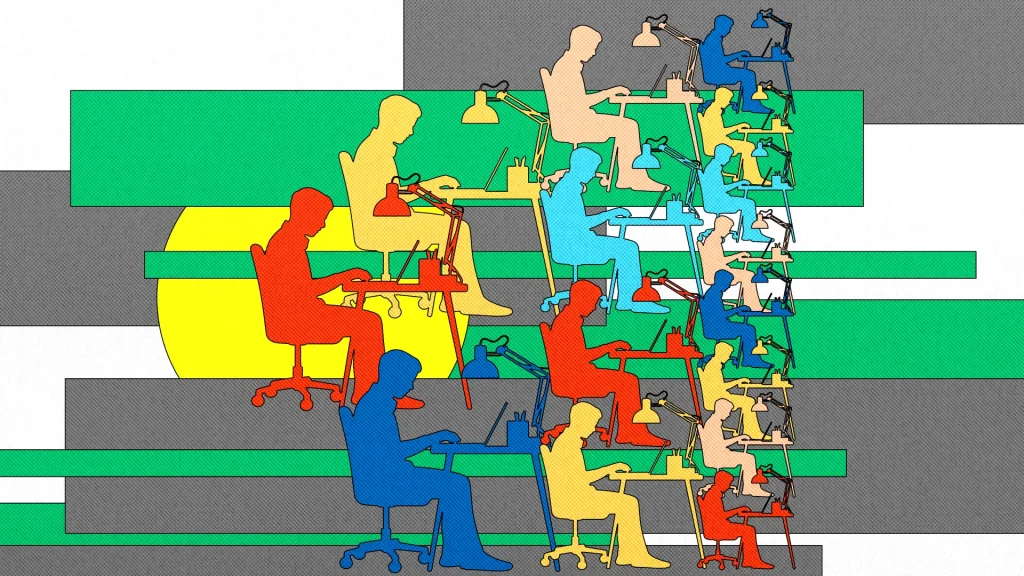
AI is making workers faster, but most companies aren’t getting richer. The difference comes from the system built around the tools, not the tools themselves.
Healthcare built for you: AI and the personalization of medicine

My son was diagnosed at 18 with a disease that mostly strikes people in their late sixties. It changed how I think about AI.
Faisal Hoque on Structural Integrity in Agentic Enterprise
Faisal Hoque on why structural integrity, governance and human oversight – not speed – are the CIO’s real test in the agentic enterprise
AI is giving HR chiefs a new job

The hard part of AI is not deploying the technology. It is reimagining the work, and the workforce that will do it.
5 people who spent decades behind the scenes, then stepped out front

From Selling Stereo Components to Shaping the Age of AI
Is AI racing beyond our control?

Amid warnings from industry insiders that AI will soon outpace human control, IMD’s experts break down where business leaders should be focusing their attention.