
First AI takes the calls. Then your company stops listening
AI is taking over the front line. Whether that deafens your company or sharpens its hearing depends on decisions leaders make now.

AI is taking over the front line. Whether that deafens your company or sharpens its hearing depends on decisions leaders make now.

Decisional and adaptive sovereignty belong on every board’s agenda.

Three philosophical proficiencies for leading in a world where old certainties are breaking down.

Here’s how to build the new capabilities.

Working with a tireless machine makes stopping feel like failure.

To understand our current moment in AI, it helps to know a little bit about diamonds.

Your best work was shaped by people who never took credit.

The leaders who keep their edge will be the ones who resist the temptation to hand over judgments to machines.

Machines may learn facts. They can’t learn to be you.

The world’s most competitive economies are also its most carefully governed. The same logic is starting to decide which companies
AI is taking over the front line. Whether that deafens your company or sharpens its hearing depends on decisions leaders make now.
Decisional and adaptive sovereignty belong on every board’s agenda.
Three philosophical proficiencies for leading in a world where old certainties are breaking down.
Here’s how to build the new capabilities.

Six 90-day plans that provide a comprehensive roadmap for AI transformation.
Here’s a 90-day plan to start building the organizational capability you need to succeed.

The future belongs to people who can think with AI—without thinking like it.

A step-by-step road map for success.

The problem is not the technology – it is the absence of three critical leadership capabilities.
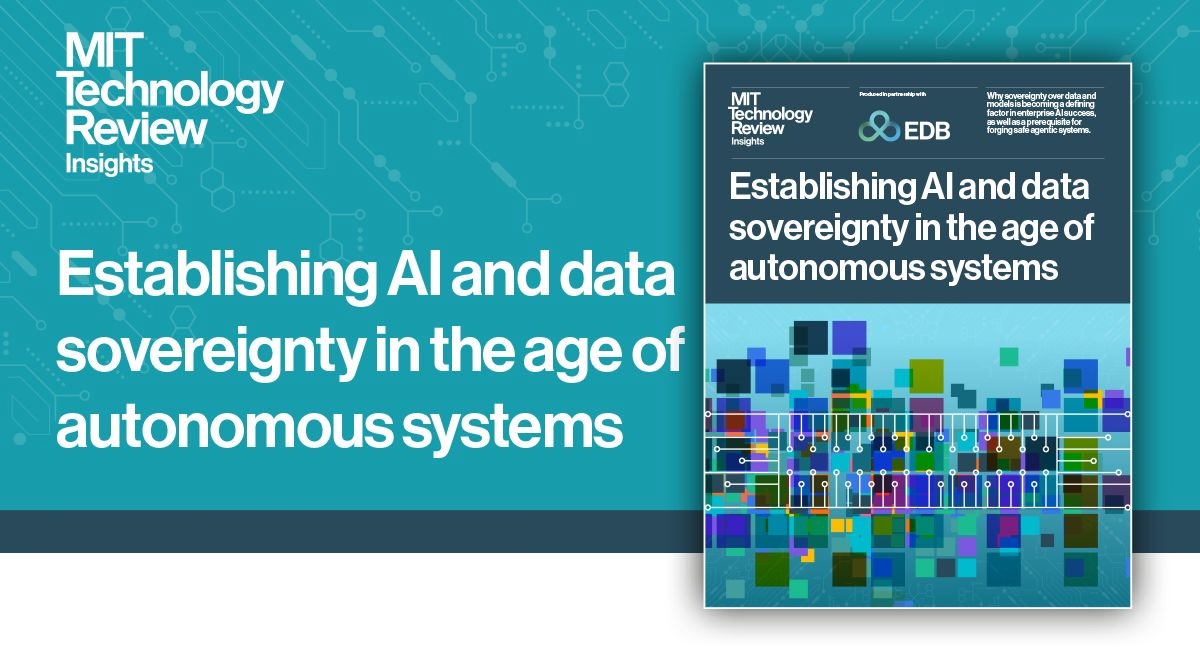
Why sovereignty over data and models is becoming a defining factor in enterprise AI success, as well as a prerequisite
AI is taking over the front line. Whether that deafens your company or sharpens its hearing depends on decisions leaders make now.
Working with a tireless machine makes stopping feel like failure.
Decisional and adaptive sovereignty belong on every board’s agenda.
Three philosophical proficiencies for leading in a world where old certainties are breaking down.

Still in the early stages of development and use, artificial intelligence, machine learning, and deep learning are already impacting how

We’ve already got self-driving cars. So what’s next for intelligent innovation in the workplace?

Management is leadership and leadership is management. Your success may depend on it.

Eastern thought and meditation are pushing ever-closer to the mainstream. Today, many ancient teachings coincide perfectly with modern research on

These 10 daily practices can help you overcome your fears.

No disruptive innovations can be made without understanding the customer’s needs.
Your best work was shaped by people who never took credit.
Machines may learn facts. They can’t learn to be you.

Europe is treating digital sovereignty as a question of self-determination. Every business should now do the same.

How to maintain your edge—and your humanity—as AI redefines the workplace.

In making something, whether it is a business, an app, a book, or art, we bring something into the world

This distinction is rooted in the balance between intrinsic and extrinsic motivation, and your company’s culture will dictate how your

The connections that the authors allude to here are more profound than the just those between people and organizations –

The short answer is, it’s complicated. But there are some tangible traits that separate a bank teller from an artist.
Innovation is not a single moment of catharsis, upheaval, or revamping. It is not a change in the form of

The “father of microsurgery” can teach us a few things about innovation. For one thing, the road to getting there
AI is taking over the front line. Whether that deafens your company or sharpens its hearing depends on decisions leaders make now.
To understand our current moment in AI, it helps to know a little bit about diamonds.
The leaders who keep their edge will be the ones who resist the temptation to hand over judgments to machines.
Decisional and adaptive sovereignty belong on every board’s agenda.
How leaders can identify and resolve AI misalignment.

Slowing down may be the hardest but most urgent skill we can develop today.

The editors of MIT SMR share the six articles that have resonated most with readers.

Why human complexity matters more than ever.

Balance ambitions with incremental improvements, macro visions with micro victories.

Why work feels empty—and how leaders and individuals can reignite purpose.
Working with a tireless machine makes stopping feel like failure.
Your best work was shaped by people who never took credit.
Machines may learn facts. They can’t learn to be you.

Hesse wrote a man who had everything, felt nothing—and wrote the way out.

The strongest person you know is running on empty. It might be you.
The future belongs to people who can think with AI—without thinking like it.

The death of boredom is quietly eroding creativity, identity, and self-awareness.

On learning to live—and lead—in a life that never fully settles.

The things AI is taking from you don’t look like losses. They look like progress. Six things quietly disappearing from

Ease is the enemy of meaning.